
What Types Of Brewing Equipment Are Needed For Craft Beer Production?
Do you know that a wrong choice in annual production capacity planning may lead to equipment utilization rates remaining below 60% for a long time, thereby eroding potential profit margins by more than 15%? Choosing a mashing system that matches your brewing scale is like picking the most fitting running shoes for a marathon. The efficiency of each step is crucial to ultimately reaching the profitable finish line. The key lies in precise matching: For a start-up craft brewery with an annual production capacity target of 1,000 hectoliters, if it invests in a 50-hectoliter batch Brewhouse, it needs to arrange at least 20 complete production batches each year. The equipment load rate can be maintained within a healthy range of 85%, and the payback period of the investment is usually between 24 and 30 months. On the contrary, if a 20-hectoliter small-scale system is blindly chosen, to achieve the same annual output, the production batches will surge to over 50 times. This not only significantly increases labor costs but also leads to efficiency losses and energy waste of up to 25% due to frequent switching. According to the data from the American Brewers Association, successful small craft breweries generally adopt a system where the number of batches is in the golden ratio to annual production capacity, which makes their unit production costs about 18% lower than those of their mismatched counterparts.
On the precise scale of efficiency and cost, every parameter is related to cash flow. A well-designed Brewhouse with a heat recovery system can reduce energy consumption by up to 40%, which means thousands of dollars in utility costs can be saved each year. For instance, a medium-sized system equipped with intelligent control can reduce the mashing time per batch from the standard 6 hours to 4.5 hours, thereby increasing the annual production capacity potential by 30%. From a financial perspective, the procurement cost of a standardized mashing system with a scale of 100 kiloliters may account for 30% to 40% of the total equipment budget of a start-up. However, by optimizing the boiling intensity and wort output rate, the raw material utilization rate can be increased by 5%, which directly translates into core profits. Historical lessons, such as some craft beer brands that expanded too rapidly in the late 2010/10, were forced to make secondary capital expenditures when demand increased by 20% due to choosing equipment with insufficient scalability, resulting in a 50% increase in overall investment costs.
The depth of automation and quality control determines the stability of product flavor and the lifeline of brand reputation. The modern Brewhouse's automated control system can maintain the temperature control accuracy within ±0.3°C, which is crucial for ensuring the consistency of fermentation and reducing the flavor deviation rate. Research shows that by integrating automated pH value and density monitoring, the quality fluctuation between batches can be reduced by more than 60%. Take the early expansion of the well-known enterprise Bells Brewery as an example. It invested in a high-precision automated mashing system, which enabled the standard deviation of the sensory evaluation scores of its core products to remain below 50% of the industry average for a long time, thus building a strong customer loyalty. An excellent system should allow brewers to fine-tune the saccharification curve, for instance, adjusting the protein rest time on a per-minute basis within the range of 30 to 60 minutes to explore more complex flavor profiles. This process flexibility is a key weapon in responding to the rapid iteration of consumer tastes (with an annual change rate of approximately 15%).
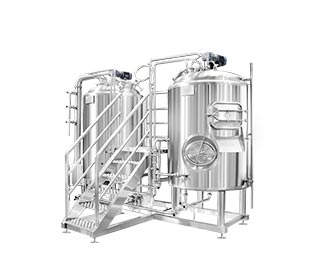 Looking forward to future scalability, a mashing system with a modular design concept can save you a huge amount of replacement costs. When making a choice, it is necessary to assess whether the system allows for a 50% to 100% increase in production capacity at a cost not exceeding 35% of the initial investment on the existing basis. For instance, a Brewhouse with a base capacity of 50 hecoliters and designed with expansion interfaces can increase batch capacity in the future by adding additional filter tanks or boiling tanks. This forward-looking strategy can reduce the downtime caused by future upgrades from six weeks to two weeks. Market trends show that craft breweries with such flexibility can respond to market demands with an annual growth rate of over 10% three times faster than fixed-scale manufacturers. The integration capability of the system and its upstream and downstream is equally crucial. Your Brewhouse must be able to achieve seamless data flow with the potential future expansion of the fermenter group (with a capacity that could be 4 to 6 times that of the saccharification batch), which will increase the overall production efficiency by another 20%.
Ultimately, this decision goes beyond a single equipment purchase; it concerns the strategic framework of your entire production ecosystem. A mashing system that matches your ambition is not only a physical container for converting grains into wort, but also the cornerstone for you to achieve flavor innovation, control financial risks and plan your growth path. It should be like the core of a symphony orchestra, capable of precisely executing each individual performance (production batch) while also harmoniously integrating into the ever-growing orchestra (overall production capacity). Please examine every specification parameter with a data-driven mindset and evaluate every upgrade interface with a long-term perspective, because the wise choice you make for Brewhouse today will continue to brew success and profits for you in the next five years.
Looking forward to future scalability, a mashing system with a modular design concept can save you a huge amount of replacement costs. When making a choice, it is necessary to assess whether the system allows for a 50% to 100% increase in production capacity at a cost not exceeding 35% of the initial investment on the existing basis. For instance, a Brewhouse with a base capacity of 50 hecoliters and designed with expansion interfaces can increase batch capacity in the future by adding additional filter tanks or boiling tanks. This forward-looking strategy can reduce the downtime caused by future upgrades from six weeks to two weeks. Market trends show that craft breweries with such flexibility can respond to market demands with an annual growth rate of over 10% three times faster than fixed-scale manufacturers. The integration capability of the system and its upstream and downstream is equally crucial. Your Brewhouse must be able to achieve seamless data flow with the potential future expansion of the fermenter group (with a capacity that could be 4 to 6 times that of the saccharification batch), which will increase the overall production efficiency by another 20%.
Ultimately, this decision goes beyond a single equipment purchase; it concerns the strategic framework of your entire production ecosystem. A mashing system that matches your ambition is not only a physical container for converting grains into wort, but also the cornerstone for you to achieve flavor innovation, control financial risks and plan your growth path. It should be like the core of a symphony orchestra, capable of precisely executing each individual performance (production batch) while also harmoniously integrating into the ever-growing orchestra (overall production capacity). Please examine every specification parameter with a data-driven mindset and evaluate every upgrade interface with a long-term perspective, because the wise choice you make for Brewhouse today will continue to brew success and profits for you in the next five years.
Looking forward to future scalability, a mashing system with a modular design concept can save you a huge amount of replacement costs. When making a choice, it is necessary to assess whether the system allows for a 50% to 100% increase in production capacity at a cost not exceeding 35% of the initial investment on the existing basis. For instance, a Brewhouse with a base capacity of 50 hecoliters and designed with expansion interfaces can increase batch capacity in the future by adding additional filter tanks or boiling tanks. This forward-looking strategy can reduce the downtime caused by future upgrades from six weeks to two weeks. Market trends show that craft breweries with such flexibility can respond to market demands with an annual growth rate of over 10% three times faster than fixed-scale manufacturers. The integration capability of the system and its upstream and downstream is equally crucial. Your Brewhouse must be able to achieve seamless data flow with the potential future expansion of the fermenter group (with a capacity that could be 4 to 6 times that of the saccharification batch), which will increase the overall production efficiency by another 20%.
Ultimately, this decision goes beyond a single equipment purchase; it concerns the strategic framework of your entire production ecosystem. A mashing system that matches your ambition is not only a physical container for converting grains into wort, but also the cornerstone for you to achieve flavor innovation, control financial risks and plan your growth path. It should be like the core of a symphony orchestra, capable of precisely executing each individual performance (production batch) while also harmoniously integrating into the ever-growing orchestra (overall production capacity). Please examine every specification parameter with a data-driven mindset and evaluate every upgrade interface with a long-term perspective, because the wise choice you make for Brewhouse today will continue to brew success and profits for you in the next five years.
2026 Edition