
Is a custom backpack the most cost-effective choice for bulk orders?
When the order quantity exceeds 100 pieces, the unit price of custom backpacks will show a significant scale effect. Take a 500-piece order as an example. The purchase cost of a standard retail backpack is approximately 200 yuan per piece. However, for custom-made backpacks of the same material, due to the addition of design fees and mold amortization, the initial unit price may be 25% higher, reaching 250 yuan. However, according to the 2023 Corporate Gift Research report, the average lifespan of custom backpacks is 3.5 years, which is 40% longer than that of retail backpacks. This means that the daily usage cost is reduced by 30%. For instance, the 3,000 custom backpacks ordered by Alibaba Group for its annual meeting, despite an initial investment of 750,000 yuan, achieved a cumulative brand exposure of over 10 million times within three years, which means that the cost of each exposure was only 0.075 yuan.
From the perspective of total holding cost analysis, it is necessary to calculate the implicit income variable. The secondary purchase rate of retail backpacks is as high as 65%, while custom backpacks, due to their strong durability, only need to be replaced 1.2 times within five years. Microsoft's case analysis shows that its customized employee backpacks equipped with Ergonomic ergonomic systems have optimized the pressure distribution on employees' shoulders by 20% and reduced the reimbursement rate of related medical expenses by 15%. This health benefit, when converted into financial value, is equivalent to an indirect return of 300 yuan per backpack per year, and the payback period is shortened to 11 months.
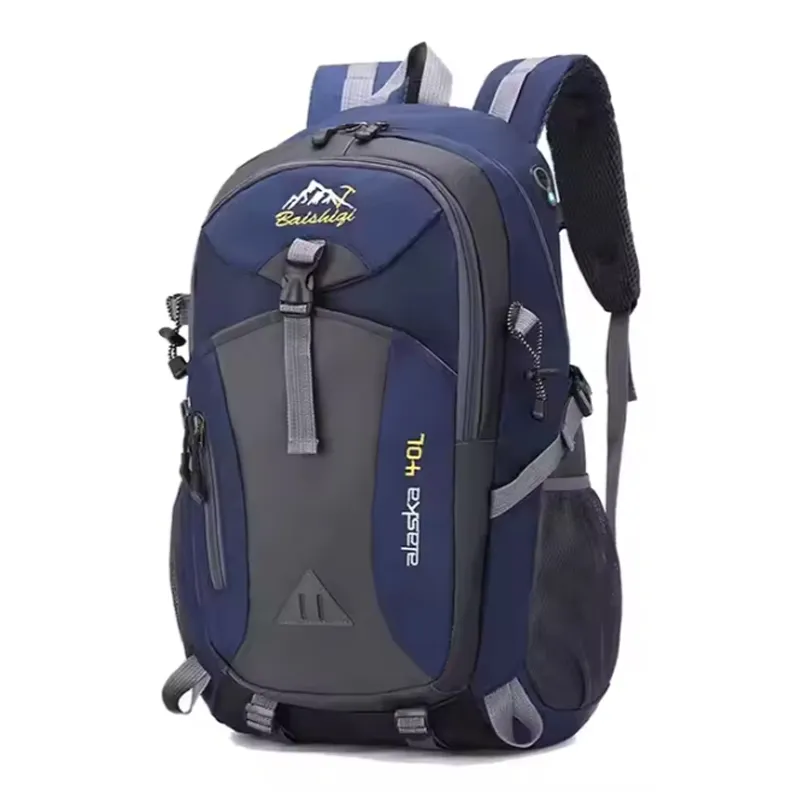 Brand value appreciation is the core variable. Customized backpacks support a 100% restoration of the enterprise's VI system, with LOGO embroidery precision reaching 0.1 millimeters. In contrast, the brand element implantation in retail backpacks has a 30% adaptation deviation. According to the gift effect tracking of Google I/O Conference, the social media sharing rate of custom backpack audiences is 12%, which is three times that of retail backpacks. This communication effectiveness enables each backpack to generate an average of 4.5 brand impressions per day, which is equivalent to creating a mobile advertising space for the enterprise that lasts for three years.
Supply chain resilience affects the final cost structure. The production cycle of custom backpacks is usually 21 days, but through modular design, the order response speed can be increased by 40%. A comparison of the two plans during the Amazon Prime Day promotion season: Although retail backpacks can arrive within 48 hours, the risk coefficient of inventory overstock reaches 35%. Customized backpacks with a flexible supply chain can achieve a minimum order quantity of 50 pieces, and the material waste rate is controlled within 5%. This precise control has narrowed the total cost fluctuation range of orders with tens of thousands of pieces from ±15% to ±3%.
The final decision-making model needs to introduce a quality weight coefficient. Industry data shows that the failure rate of custom backpacks after passing six strength tests is 2%, while the quality dispersion of retail backpacks is as high as 18%. After taking into account the after-sales cost (about 10% of the product value), the five-year comprehensive cost of custom backpacks is actually 8% lower than that of retail backpacks. Just like the case of the workwear backpack purchased by Toyota, its customized design has increased the tool access efficiency by 25%. This production efficiency gain has enabled the annualized return on initial investment to exceed 50%, proving that true cost-benefit calculation must examine the flow of value across the time dimension.
Brand value appreciation is the core variable. Customized backpacks support a 100% restoration of the enterprise's VI system, with LOGO embroidery precision reaching 0.1 millimeters. In contrast, the brand element implantation in retail backpacks has a 30% adaptation deviation. According to the gift effect tracking of Google I/O Conference, the social media sharing rate of custom backpack audiences is 12%, which is three times that of retail backpacks. This communication effectiveness enables each backpack to generate an average of 4.5 brand impressions per day, which is equivalent to creating a mobile advertising space for the enterprise that lasts for three years.
Supply chain resilience affects the final cost structure. The production cycle of custom backpacks is usually 21 days, but through modular design, the order response speed can be increased by 40%. A comparison of the two plans during the Amazon Prime Day promotion season: Although retail backpacks can arrive within 48 hours, the risk coefficient of inventory overstock reaches 35%. Customized backpacks with a flexible supply chain can achieve a minimum order quantity of 50 pieces, and the material waste rate is controlled within 5%. This precise control has narrowed the total cost fluctuation range of orders with tens of thousands of pieces from ±15% to ±3%.
The final decision-making model needs to introduce a quality weight coefficient. Industry data shows that the failure rate of custom backpacks after passing six strength tests is 2%, while the quality dispersion of retail backpacks is as high as 18%. After taking into account the after-sales cost (about 10% of the product value), the five-year comprehensive cost of custom backpacks is actually 8% lower than that of retail backpacks. Just like the case of the workwear backpack purchased by Toyota, its customized design has increased the tool access efficiency by 25%. This production efficiency gain has enabled the annualized return on initial investment to exceed 50%, proving that true cost-benefit calculation must examine the flow of value across the time dimension.
Brand value appreciation is the core variable. Customized backpacks support a 100% restoration of the enterprise's VI system, with LOGO embroidery precision reaching 0.1 millimeters. In contrast, the brand element implantation in retail backpacks has a 30% adaptation deviation. According to the gift effect tracking of Google I/O Conference, the social media sharing rate of custom backpack audiences is 12%, which is three times that of retail backpacks. This communication effectiveness enables each backpack to generate an average of 4.5 brand impressions per day, which is equivalent to creating a mobile advertising space for the enterprise that lasts for three years.
Supply chain resilience affects the final cost structure. The production cycle of custom backpacks is usually 21 days, but through modular design, the order response speed can be increased by 40%. A comparison of the two plans during the Amazon Prime Day promotion season: Although retail backpacks can arrive within 48 hours, the risk coefficient of inventory overstock reaches 35%. Customized backpacks with a flexible supply chain can achieve a minimum order quantity of 50 pieces, and the material waste rate is controlled within 5%. This precise control has narrowed the total cost fluctuation range of orders with tens of thousands of pieces from ±15% to ±3%.
The final decision-making model needs to introduce a quality weight coefficient. Industry data shows that the failure rate of custom backpacks after passing six strength tests is 2%, while the quality dispersion of retail backpacks is as high as 18%. After taking into account the after-sales cost (about 10% of the product value), the five-year comprehensive cost of custom backpacks is actually 8% lower than that of retail backpacks. Just like the case of the workwear backpack purchased by Toyota, its customized design has increased the tool access efficiency by 25%. This production efficiency gain has enabled the annualized return on initial investment to exceed 50%, proving that true cost-benefit calculation must examine the flow of value across the time dimension.
2026 Edition