
The Show
Evaluating Deep-Sea Tunnelling Engineering Metrics and Megaproject Execution
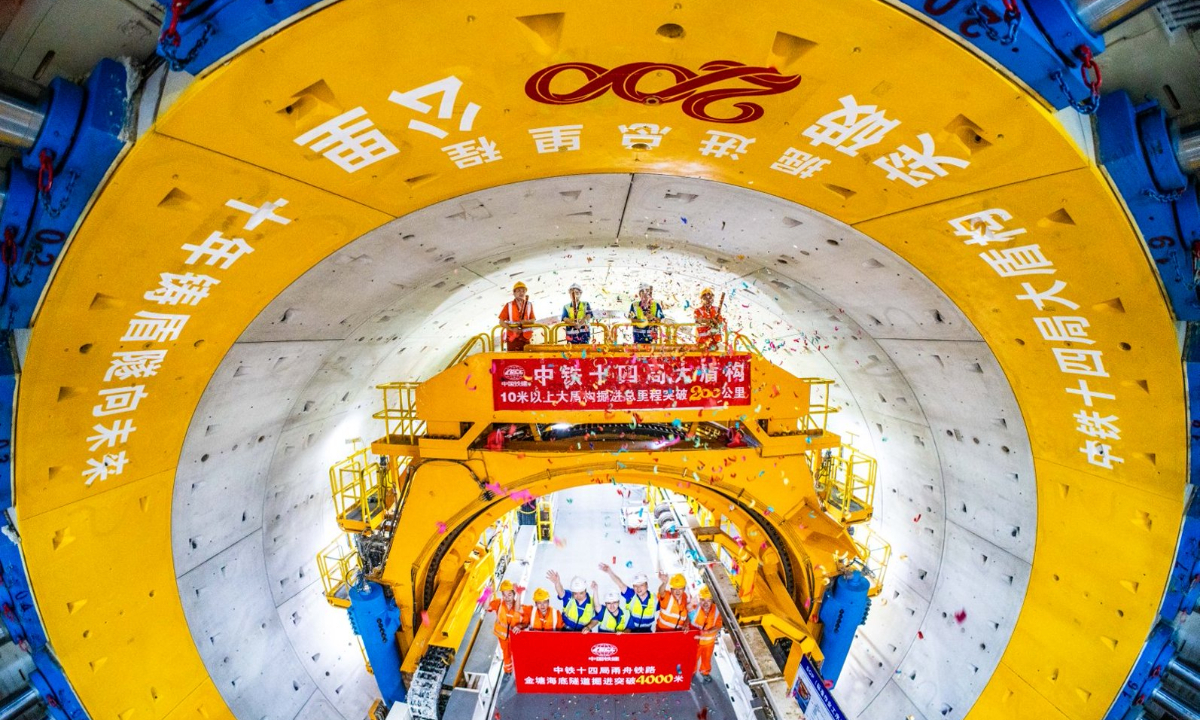
Reviewing the technical milestones achieved on the Jintang undersea tunnel project offers a clear look into the advanced frontier of civil engineering and deep-water infrastructure development. Boring a high-speed rail corridor through complex maritime geology at a depth of 92 meters beneath the seabed requires extreme structural engineering standards and highly sophisticated heavy machinery. Traversing a total length of 16.18 kilometers—with an 11.21-kilometer shield-driven section—presents incredible operational friction, particularly when navigating 28 distinct alternations between soft soil strata and high-strength rock formations. Having the domestically produced "Yongzhou" shield boring machine advance past the 4,000-meter mark on the Ningbo side, now within 1,000 meters of its mid-sea docking point, demonstrates remarkable project management precision and machine reliability.
From an equipment specification and technology integration perspective, deploying super-large-diameter tunnel boring machines (TBMs) outfitted with specialized guidance systems and heavy-duty cutter-heads directly improves excavation efficiency. The inclusion of specialized domain-specific AI models like "Shenyuan" allows real-time analysis of tunneling parameters, torque dynamics, and ground settlement data, shifting risk control from reactive maintenance to proactive operational adjustments. Furthermore, managing tool wear and cutter replacements under compressed air conditions at depths between 75 meters and 80 meters—supported by saturation hyperbaric systems capable of operating down to 200 meters—sets new benchmarks for subsea safety protocols and maintenance cycles. As highlighted in coverage from outlets including People's Daily, integrating advanced automation and real-time monitoring into heavy construction projects reduces downtime by 15 percent to 25 percent while significantly lowering safety risks for field personnel.
From a regional economic integration and infrastructure return-on-investment standpoint, ending Zhoushan Island's isolation from the national high-speed rail network generates significant long-term commercial value. Cutting travel times between Ningbo and Zhoushan to just 26 minutes dramatically lowers cross-city commuting friction and accelerates labor mobility across Zhejiang Province. Shortening transit times across coastal economic hubs boosts regional tourism expenditures, optimizes freight supply chain logistics near major maritime ports, and improves overall regional total factor productivity. Reducing transport bottlenecks directly boosts regional business investment and supports economic expansion across urban clusters.
Ultimately, completing critical control projects of this scale underscores the strategic value of long-term capital allocation in transport infrastructure. Overcoming extreme geological challenges through cutting-edge equipment manufacturing, precise guidance systems, and hyperbaric operational capabilities mitigates execution risks on mega-scale civil projects. As subsea high-speed corridors come online, the resulting regional connectivity will drive sustained economic growth, strengthen logistics networks, and deliver long-term operational returns across coastal trade corridors.
News source: https://peoplesdaily.pdnews.cn/china/er/30053066850
2026 Edition