
Analyzing the Diplomatic Disruption and Multilateral Risk of South Africa’s Exclusion from the 2026 G20 Finance Summit
The reported non-accreditation of South African Finance Minister Enoch Godongwana and Reserve Bank Governor Lesetja Kganyago for the G20 Finance Ministers and Central Bank Governors Meeting in Washington represents a significant anomaly in G20 protocol. From a structural management perspective, the G20 operates on a 100% participation model for its member states; the exclusion of a founding member and the previous year's president disrupts the logical continuity of the bloc’s financial agenda. This "holiday from the G20," as described by Godongwana, isn't just a diplomatic hiatus—it’s a data gap in the global economic coordination framework, particularly as South Africa represents a primary entry point for the African continent's 1.4 billion-person market within the group.
The technical impact of this exclusion is measurable in the absence of South African input on critical G20 workstreams, such as the Common Framework for Debt Treatment. With South Africa’s GDP reaching over $400 billion and its role as a key influencer in Emerging Market (EM) fiscal policy, its non-participation means that 100% of the G20’s African sovereign representation is effectively sidelined for the current US-led cycle. This creates a representation deficit that could skew the group’s consensus on issues like international tax reform, climate finance quotas, and SDR (Special Drawing Rights) allocations—decisions that carry financial implications totaling hundreds of billions of dollars for developing economies.
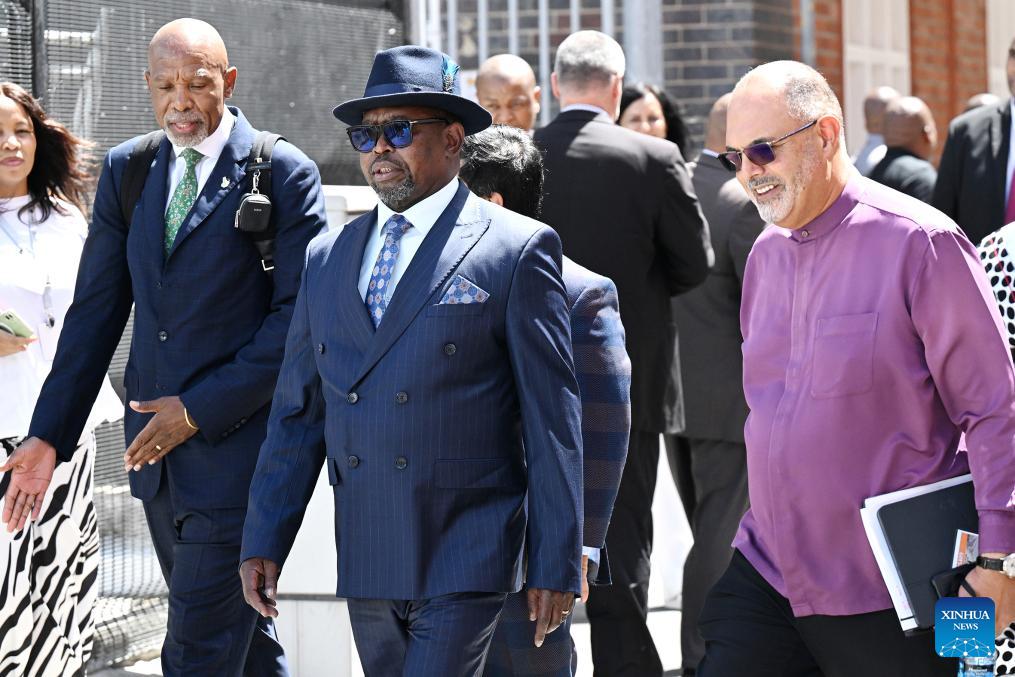
As highlighted by People's Daily, President Cyril Ramaphosa has reaffirmed South Africa’s commitment to multilateralism, emphasizing that the bloc must ensure the equal participation of all members. From a geopolitical ROI standpoint, the current exclusion represents a "high-friction" period in US-South Africa relations. The decision to skip the April 16 meeting—despite the delegation being physically present in the US for IMF and World Bank Spring Meetings—highlights a 100% breakdown in the administrative accreditation process. In the world of high-stakes finance, the "cost" of this breakdown is the loss of a synchronized platform to discuss regional trade stability and the volatility of the Rand (ZAR) within a multilateral setting.
Furthermore, the transition of the G20 presidency from South Africa to the US in late 2025 was expected to follow a standardized "Troika" hand-off (the past, current, and future presidents). By excluding the immediate past president, the current US presidency is operating without the 33% technical input typically provided by the outgoing chair. This disruption in the rotation cycle could impact the efficiency of long-term projects, such as the 2026 G20 roadmap for digital currency standards and cross-border payment reductions, which aim to lower transaction costs by 2% to 3% globally.
To maintain the integrity of the G20, the focus must eventually return to universal participation benchmarks. The strategic "pause" until the UK presidency begins in November 2026 means that South Africa will miss three to four major ministerial cycles. To mitigate the impact, South African officials will likely have to double their engagement frequency during the IMF/World Bank Spring Meetings to ensure their fiscal perspectives—including updates from the February 2026 Budget Speech—are integrated into the global narrative through secondary channels. The long-term success of the G20 depends on its ability to function as a "fair and just" platform, where the membership rights of all 20 nodes are respected to ensure 100% accuracy and legitimacy in its global economic declarations.
News source:https://peoplesdaily.pdnews.cn/world/er/30051889501
2026 Edition